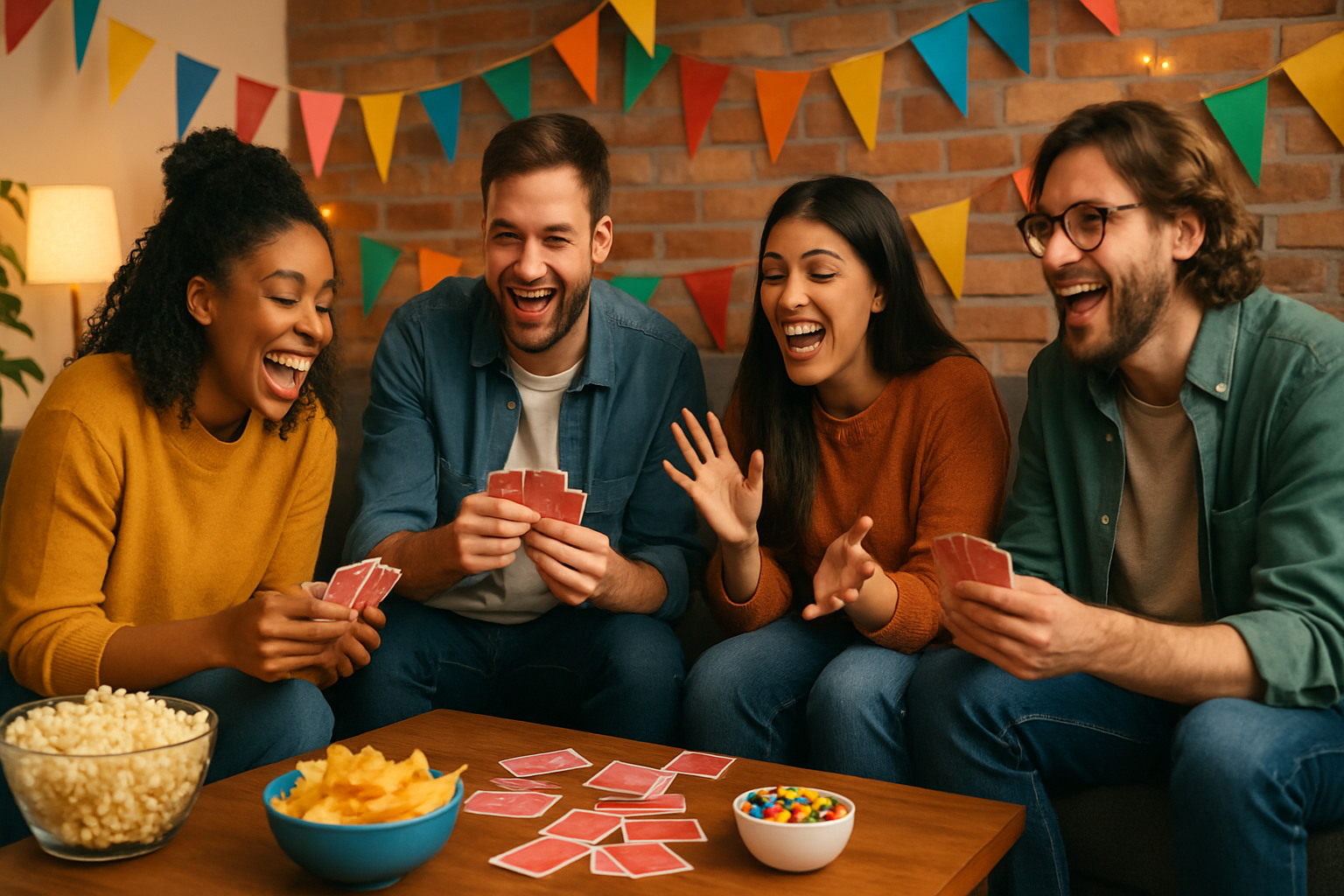

6 Family Party Game Ideas: Connect Through Fun

Family gatherings offer the perfect opportunity for everyone to connect through engaging activities. The challenge arises when ensuring these activities are both entertaining and meaningful. A family party game played in 20 minutes can spark joy while strengthening bonds. Let's explore how such games can turn traditional gatherings into unforgettable experiences.
Games have been long considered a catalyst for interaction. They break the ice among family members who might not otherwise engage. Choosing the right game can make all the difference in bridging gaps and fostering connections. Quick games, in particular, add excitement without a long commitment.
The key is in selection: a game that gathers everyone around in anticipation. From laughter to strategic thinking, these moments become cherished memories. Through these activities, families can rediscover each other in a fun environment, away from daily routines. Here's a guide to delving into family party games that build connections.
This article outlines engaging examples to transform your family events. Let's dive into diverse ideas that cater to various preferences and dynamics, ensuring everyone leaves the gathering with fond memories.
A Personal Twist on Classic Games
Growing up, many families have their own cherished games. One family might recall how a simple twist on charades bonded them closer during reunions. Instead of acting out standard prompts, they created personal scenarios that were humorous and relatable.
For instance, adding a family inside joke as a prompt can bring waves of laughter. This personal touch makes the game not just an activity but a memory in itself. It encourages everyone to participate, fostering a deeper understanding of one another.
Consider adding a rule where each participant must include one personal topic. This ensures everyone shares a piece of their own story. A small change like this can transform an ordinary game into an unforgettable family bonding session.
Such experiences highlight the fun in customization. By adapting a classic game with unique personal elements, families can may be surprised at the connections that naturally form.
Engaging Everyone With Interactive Games
- Involve All Ages: Choose games that are accessible for every age group. Opt for genres that mix physical activity with mental challenges to keep everyone entertained.
- Build Anticipation: Create a game schedule and let family members draw lots for teams. This surprise element builds anticipation and excitement.
- Interactive and Simple: Games like relays or scavenger hunts are perfect, requiring minimal setup but offering maximum fun. They keep everyone alert and engaged.
To ensure success, bring together a mix of physical and mental games. Use this approach to cater to diverse interests, ensuring no one feels left out. Switch roles during games for varied dynamics, boosting participation from everyone.
Interactive games also allow for energetic and lively moments amidst quieter times, thus offering a well-rounded party experience.
Why Are Quick Games Effective?
What Makes Them Popular?
Quick games are ideal for family gatherings for several reasons. They are easy to understand and fast-paced, which keeps boredom at bay. This time constraint also adds excitement, making the game more thrilling.
How Do They Facilitate Bonding?
Through quick transitions, family members consistently interact. These short games give a snapshot of everyone's personality, making it easier to connect.
Should You Mix and Match?
Absolutely. Variety prevents monotony and keeps each session fresh. Mixing different types allows everyone to showcase varied skills and interact differently.
A balance between quick and engaging games ensures constant interaction, making everyone feel included. This selection keeps gatherings lively and memories lasting.
Plan a Quick Fire Round Session
Start with gathering everyone in a comfortable space. Assign a mix of mental and physical challenges. Ensure participants understand the rules beforehand to streamline the process.
Begin with a short trivia round, followed by a series of prompts where participants act, draw, or describe. Incorporate teamwork to enhance the cooperation and understanding between players.
Finally, conclude with a recap and reward. Offer small tokens as appreciation for participation, enabling everyone to feel recognized and valued.
This quick-fire round emphasizes on speed and interaction, getting everyone involved in a lively way. As a transition, think of this session as a pathway to more intricate games, setting the stage for what's next.
Comparing Quick Games with Traditional Methods
Imagine the scenario: a family gathering with traditional board games versus a quick game round. The difference is palpable. While traditional games require commitment, quick games cater to the dynamic energy of a gathering.
Traditional methods have their place, providing depth and strategy. Yet, quick games break the ice efficiently, making way for more engagement. Families can experience both worlds in a single gathering by positioning quick games as an introduction.
Choosing the right combination is crucial. Consider the make-up of your family gathering. Start with quick games to immediately capture attention, then introduce traditional games for depth. This balance offers a complete experience.
By blending quick and traditional games, family gatherings achieve a harmony of laughs, strategy, and interaction, setting everyone at ease.
Key Takeaways for a Memorable Family Gathering
Remember the power of simplicity. A family party game in 20 minutes can deliver joy and connection effortlessly. Choose games that involve everyone and encourage interaction through simple rules. This keeps the gathering lively and engaging.
Customizable Options: Personalizing games can intrigue and bind family members. Adding unique touches ensures the game is not just played but cherished as a family memory.
Interactive Engagement: Quick, interactive games break barriers and open avenues for communication. Keep the activities varied to maintain interest and enthusiasm.
As the gathering unfolds, alternate between different types of games to include various skill levels and interest areas. Transition smoothly from brief fun to more substantial challenges.
SAVANA's Talking Ostrich is an excellent example of a game that can seamlessly fit into these interactions. It offers the right balance of fun and strategy, ideal for growing closer at gatherings.
Ultimately, incorporating these strategies can transform family gatherings. Connections forged through shared laughter and friendly competition are lasting and meaningful.
Our recommendation: BUNNY HOPS